
The Sussex Gardener: Stewardship. This month in your garden
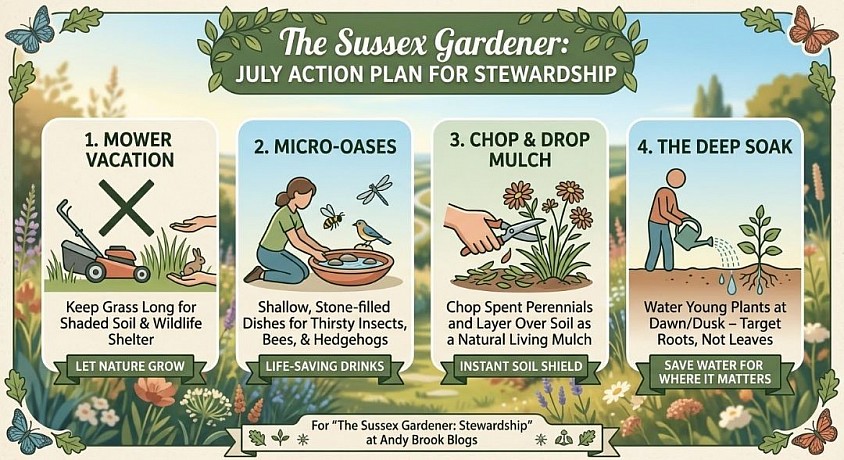
The Sussex Gardener: Stewardship. July in your garden
The gentle, soft green surge of spring is a distant memory now. As we step into July, Sussex is basking—and baking—under our third intense heatwave of the year. With record-stretching 35°C days and a distinct lack of rain, our garden gates open onto a landscape that looks a little more Mediterranean than classic English countryside.
But as organic, nature-first gardeners, a drought shouldn't prompt a battle against the elements. Stewardship in a time of extreme heat isn't about using endless tap water to freeze a manicured picture in time. Instead, it’s a shift in perspective. It’s about stepping back, letting go of the perfect lawn, protecting our precious living soil, and turning our plots into life-saving sanctuaries for the wildlife riding out this heatwave right alongside us.
When the ground is cracked and the midday sun is fierce, true stewardship means working with the summer heat, not against it.
🌍 Your July Stewardship Actions: Guarding and Giving Back
To help your patch stay resilient, here are four practical, nature-led actions to focus on this month:
1. Step Away from the Lawn Mower
If your grass has turned a crisp, biscuity brown, don’t panic—and don’t water it. Turf is incredibly resilient and will spring back to life with the autumn rains. The best thing you can do now is leave the mower in the shed. Keeping whatever grass and wild clover you have as long as possible creates a cool, shaded canopy close to the earth. This traps what little ground moisture remains, preventing the soil from baking into concrete, and provides a critical, shaded refuge for frogs, slow-worms, and beetles trying to escape the midday sun.
2. Set Up Micro-Oases for Thirsty Wildlife
Water is the ultimate currency in a July heatwave. While larger birds can fly to find water, small insects, solitary bees, and hedgehogs are trapped in local territories.
The Task: Place shallow saucers or gravel-filled trays at ground level and in your borders.
The Trick: Fill them with stones or marbles that sit just above the water line. This gives thirsty honeybees, hoverflies, and butterflies a safe place to land and drink without the risk of drowning. Change the water daily to keep it fresh.
3. Deploy the "Chop and Drop" Soil Shield
Bare soil is public enemy number one in a heatwave; bare earth loses moisture instantly and cooks the vital microbes living just beneath the surface. Look around your borders for early summer perennials that have finished flowering or are looking a bit scorched. Chop them back, but instead of carting them off to the compost bin, drop the green material directly onto the bare soil around your plants. This instant, organic "living mulch" acts as a shield, dropping the soil temperature by several degrees and locking in the moisture underneath.
4. Practice the "Deep Soak" Water Audit
With water butts running low and resources tight across the South East, we have to be exceptionally strategic. Established perennials and deep-rooted shrubs can look after themselves—let them hunt for moisture deep underground. Save your precious harvested rainwater exclusively for young bare-root plants put in this spring, and your high-intensity summer veg. When you do water, do it at dusk or dawn, and give the base of the plant a slow, thorough drenching rather than a quick sprinkle. This teaches the roots to grow downwards where it's cool, rather than rising to the surface where they will bake.
A Note on Fires: With everything so exceptionally dry across Sussex, nature is fragile right now. Please avoid using any garden braziers, fire pits, or barbecues near dry borders or long grass. One stray spark can compromise a wildlife habitat you've spent years building.
Regenerative gardening is a lesson in patience and observation. When we stop trying to force our gardens to look pristine in a heatwave, we start noticing the quiet triumphs: the hoverflies packed onto the drought-tolerant sea hollies, or the hedgehog drinking safely from a shallow dish at twilight. We aren't just tending plants; we are holding the line for the ecosystem.
What wild visitors are finding refuge in your shaded borders this week? Are your water butts holding out? Let’s swap notes and support each other in the comments below! ☀️🍂🐦
#JulyGardening #SussexGardening #RegenerativeGardening #WildlifeSanctuary #WaterWise #Stewardship #AndyBrookBlogs
The Joyful June: Managing the Surge and Shielding the Soil
June has arrived, and with it, the Sussex landscape is in full, glorious explosion. The soft growth of spring is hardening into summer, the birds are feeding their second broods, and the garden is humming with maximum energy.
But as the days reach their longest and the thermometer climbs, a regenerative garden requires a shift in mindset. June isn't about fighting the summer surge; it’s about working with it to shield your soil and support your local ecosystem through the hottest months of the year.
☀️ The June Checklist: Shielding and Sustaining
1. Embrace the "June Drop" and Thinnings
If you grow fruit trees or summer veg, you might notice your apples, pears, or plums dropping small, immature fruit this month. Don't panic—this is the "June Drop," nature's way of self-regulating.
The Task: Help the tree out by thinning clusters of fruit further, and do the same for your root veggies like carrots and beetroot.
The Regenerative Twist: Don't throw those thinnings away! Toss them straight into your compost heap, or leave a small pile of fruit thinnings near your beetle bank. They provide a quick, sugary energy boost for ground beetles and foraging insects.
2. Create "Living Mulches" with Stachys and Ground Cover
While we talked about woodchip and compost mulches earlier in the spring, June is the perfect time to let your plants do the heavy lifting.
The Task: Actively utilize dense, low-growing perennials—like lamb's ear (Stachys), cranesbill geraniums, or wild thyme—to carpet open spaces between your larger architectural plants like Phlomis or Echinacea.
The Benefit: These plants act as a "living green carpet." They shade the soil directly, stopping the sun from baking the earth dry, locking in moisture, and completely eliminating the need for bare, resource-heavy weeding.
3. The Midsummer Water Audit
By June, the summer heat can start drying out water butts quickly. It’s time to be incredibly strategic.
The Task: Do a strict water audit. Established, deep-rooted perennials like Rudbeckia and sea hollies can handle a dry spell. Save your harvested rainwater exclusively for your high-intensity vegetable beds and any young shrubs or trees planted this year.
The Benefit: By teaching your established ornamental plants to seek water deep underground, you build a tougher, more self-sufficient garden that doesn't rely on the tap.
🌍 Your June Scale of Impact: Beating the Summer Heat
No matter the size of your patch, here is how you can make a meaningful difference for Sussex wildlife during the midsummer peak:
Window Box: Keep your mini-pond or shallow pebble saucers topped up daily. On hot June days, honeybees, solitary wasps, and butterflies need accessible, safe drinking spots where they won't drown.
Small Patio: Plant up a late-summer container of Echinacea (Coneflowers). They love the June sun, look spectacular, and provide a vital nectar station just as early spring flowers begin to fade.
Medium Garden: If you took part in "No Mow May," resist the urge to shave the entire lawn back to the roots now. Keep some areas long, or transition to a "Let It Bloom June" approach. Cut wandering paths through the grass, leaving the rest as a cool, shaded canopy for frogs and small mammals.
Large Garden: Build or top up a permanent Beetle Bank or log pile in a shady corner. As the upper layers of soil dry out in the sun, these decaying wood sanctuaries stay damp and cool, providing a critical summer refuge for vital predators like centipedes and ground beetles.
The Midsummer Promise: Regenerative gardening isn't about maintaining a manicured, static picture. It’s about managing a dynamic, living system. When we protect our soil from the June sun and keep water pathways open for wildlife, we aren't just keeping a garden—we are sustaining a sanctuary.
What heat-busting signs of life are you seeing in your borders this month? Let me know in the comments below—let’s swap notes! 🌻🦋
#JuneGardening #SussexNature #RegenerativeGardening #SoilHealth #LivingMulch #AndyBrookBlogs
