
Join Andy and Stuart for a daily Yorkshire holiday blog from July 25 to August 4 2026. Follow along as they explore nostalgic sights, local attractions, and favorite places from their youth across scenic Yorkshire
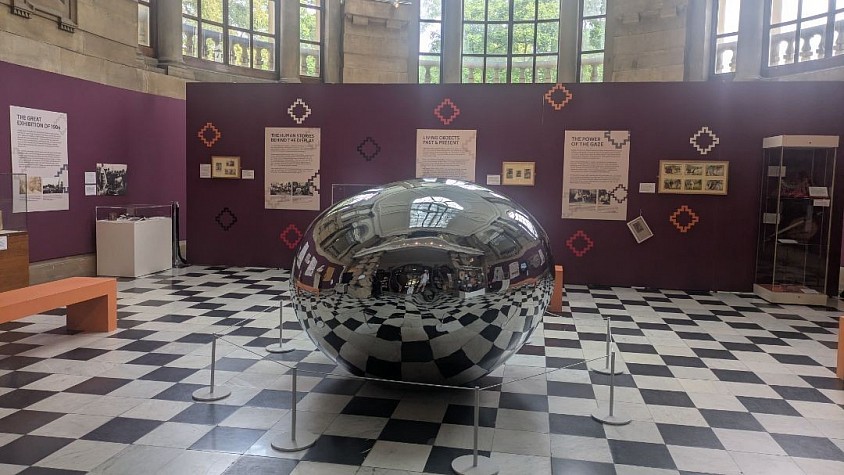
Art Gallery at Lister Park in Bradford
Day 11: Urban Sanctuaries, Art Treasures, and Farewell to the North
All good things must eventually come to an end. Today marked my final day in Yorkshire before heading south, while Stuart stayed on to enjoy another ten days in the North. With a few hours to spare before my train, we decided to spend the morning exploring the magnificent Lister Park in Bradford.
A Base Camp Built for Discovery: The Holiday Inn Express Bradford
Reflecting on our trip, our accommodation at the Holiday Inn Express Bradford proved to be an absolute triumph. Positioned directly opposite Bradford Interchange—the city's primary hub for buses and trains across the region—it offered incredible convenience for our daily adventures.
Between the prime location, a couple of minutes' walk to the city center, and a generous serve-yourself breakfast, a 14-night twin room booked with a Blue Light discount came to just £670. It ticked every single box for comfort, value, and seamless travel!
Lister Park: A Green Oasis for the Community
Lister Park was gifted to the city by Samuel Lister, 1st Baron Masham—a prolific inventor and prominent mill owner. Having spent years conducting research and analysis for Sussex local authorities to help parks achieve Green Flag status, I look at green spaces through a seasoned lens. I can say without hesitation that Lister Park ticks every parameter with flying colors.
It serves as true "green lungs" for Bradford—an essential urban sanctuary offering quiet mind spaces for the local community to gather, relax, and immerse themselves in nature. The park is so expansive that despite our best efforts, we didn't even have enough time to explore the Botanical Gardens area!
Cartwright Hall & David Hockney
Nestled within the park's sweeping grounds is Cartwright Hall Art Gallery, a grand civic building that houses a wonderful permanent display dedicated to Bradford-born artist David Hockney. Free to enter, it provides a fantastic cultural draw, ensuring that even visitors who aren't drawn to horticulture will find inspiration within the park grounds.
Tempus Fugit: Heading South
Tempus fugit—time flies when memories are being made. Before long, it was time to head to the station where my LNER train was waiting to carry me back home.
It has been a brilliant trip filled with rich history, stunning landscapes, nostalgic reunions, and inspiring community spirit. The North certainly delivered, leaving me with a collection of wonderful memories to cherish.
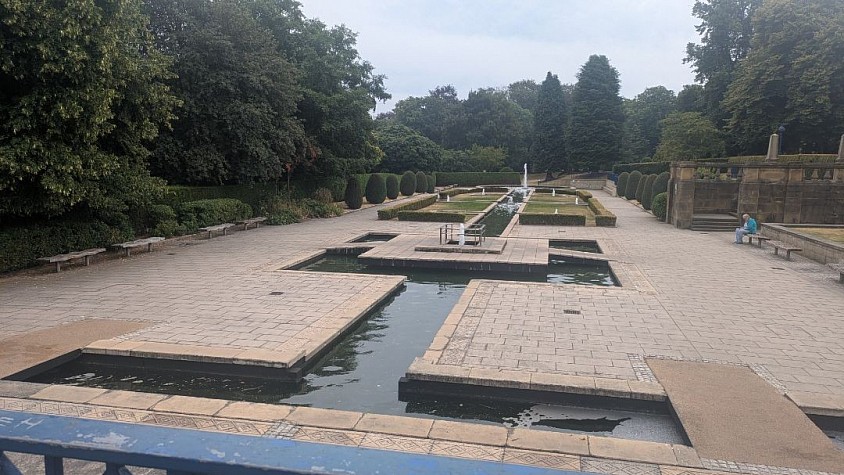
Mughal gardens at Lister park in Bradford
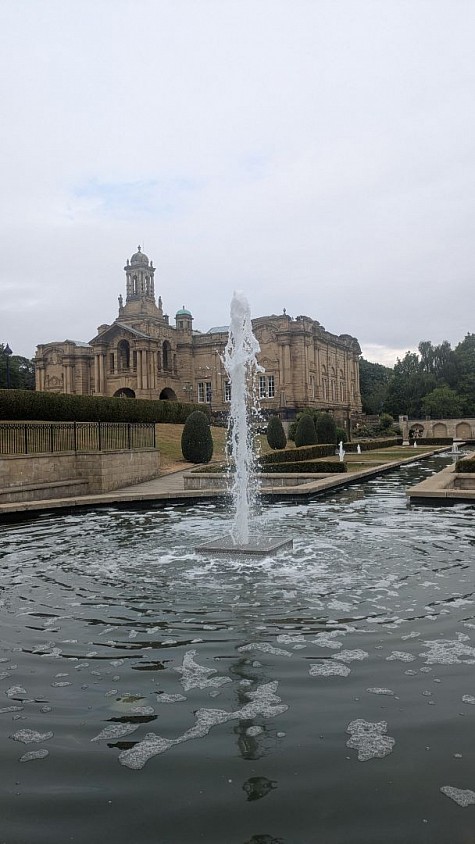
Cartwright Hall Art Gallery at Lister Park in Bradford
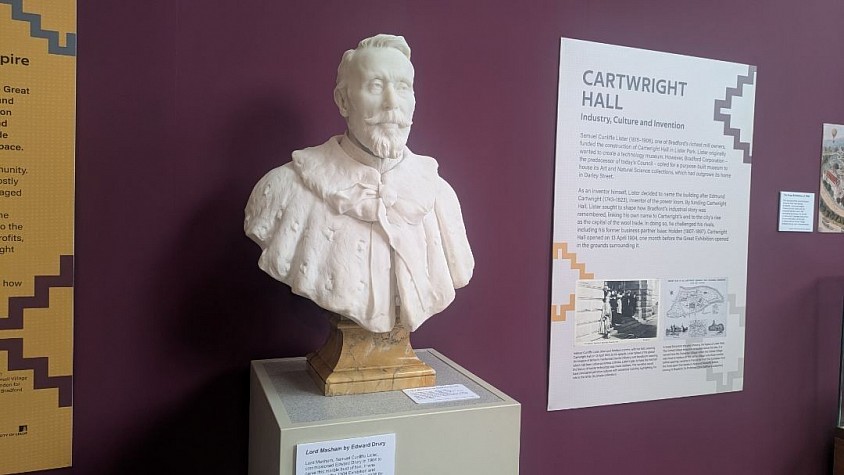
Samuel Lister who sold the Park and buildings to Bradford Council

Durham Cathedral garden
Day 10: Norman Power, Rock History, and Nostalgia in Durham & Newcastle
Glorious weather greeted us this morning as we prepared for another lengthy rail journey into the North East—this time bound for Durham and Newcastle. However, the vagaries of post-privatisation rail ticketing struck early! Navigating TransPennine and LNER services revealed some eye-watering price absurdities: an off-peak day return (even with a Railcard) came out to £48. An unpleasant shock to start the day, but our destination promised to make it all worthwhile.
Durham: Soaring Heights, Sanctuary, and the Shadows of History
Arriving in Durham by train is always a memorable spectacle. The River Wear carves a dramatic, winding peninsula that is crowned by the soaring heights of Durham Cathedral and University. Perched on a neighbouring hill, the railway station offers a commanding view of this skyline. Knowing what lay ahead, catching the local community bus was a total no-brainer—ferrying visitors across the city every 15 minutes straight to the Cathedral doors.
Up close, the sheer scale of the Cathedral is awe-inspiring. We paused at the famous Sanctuary Knocker on the heavy main doors—a medieval lifeline where those fleeing serious crimes could knock, gain sanctuary, and be granted 37 days to either face justice or leave the realm forever.
While the Cathedral was built to house the sacred relics of St Cuthbert and The Venerable Bede, its foundation is also tied to a much darker political chapter. Following his brutal "Harrying of the North" (1069–1070)—a scorched-earth campaign that devastated crops, livestock, and communities to crush Anglo-Danish rebellions—William the Conqueror sought to solidify Norman dominance. Appointing William de St-Calais as the first Prince-Bishop, construction began on this massive stone fortress of faith in August 1093. Looking up at the magnificent Rose Window in the serene, quiet hall, it feels like an act of atonement set in stone—a stark contrast between dark medieval power and spiritual peace.
Top Tip: The Cathedral café is thoroughly recommended! Generous portions of meals and cakes at fantastic prices. Stuart gives a special nod of approval to the leek soup!
Newcastle: Rock 'n' Roll Nostalgia & City Grandeur
Boarding a delightfully air-conditioned TransPennine Express service, we journeyed onward to Newcastle. For me, Newcastle carries a deep personal nostalgia—it’s where I went to college many years ago. Stepping off the train, the city was just as vibrant and grand as I remembered. From the bustling energy of Northumberland Street and Grey’s Monument to the iconic bridges spanning the river, everything is built on a magnificent scale.
Passing the City Hall brought a flood of musical history to mind. It was right here in October 1969, during Newcastle Arts Week, that the progressive rock band The Nice first performed the Five Bridges Suite. A week later, it was recorded with a full orchestra down in Croydon and released on their famous 1970 album. I know these precise details thanks to a wonderful personal connection—having chatted about it years later with Keith Emerson himself when we were both living down in Lancing, Sussex!
It was a brilliant, nostalgic day out. As we wrapped up, I couldn't help but ponder how the River Tyne now boasts seven bridges—a far cry from when Keith and his bandmates were in their prime. A fittingly reflective note as Iprepared for my final day Up North...
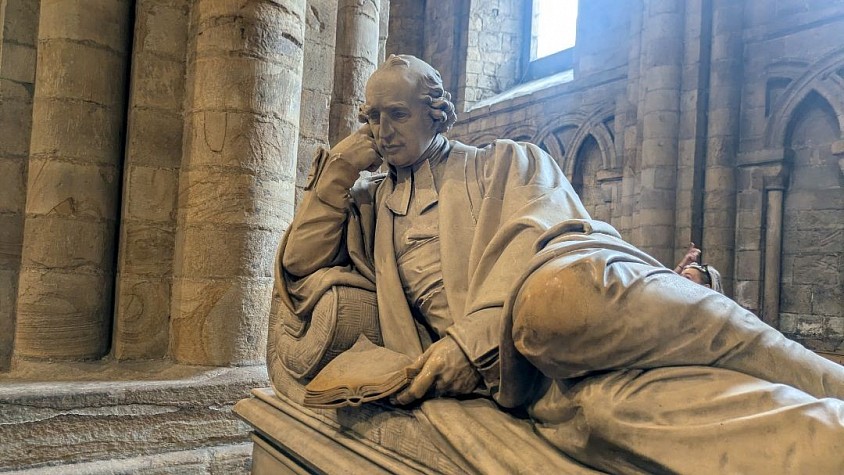
Bishop William Van Mildert, last "Prince Bishop" and important in the founding of Durham University
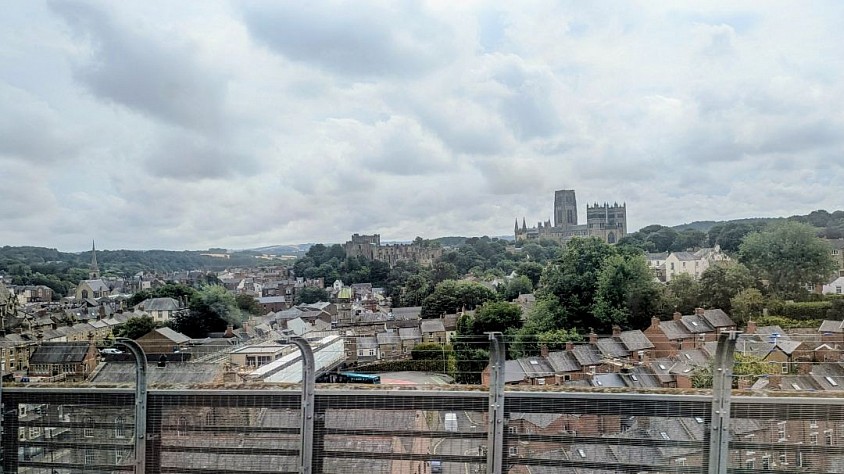
Durham and the Cathedral from our LNER train
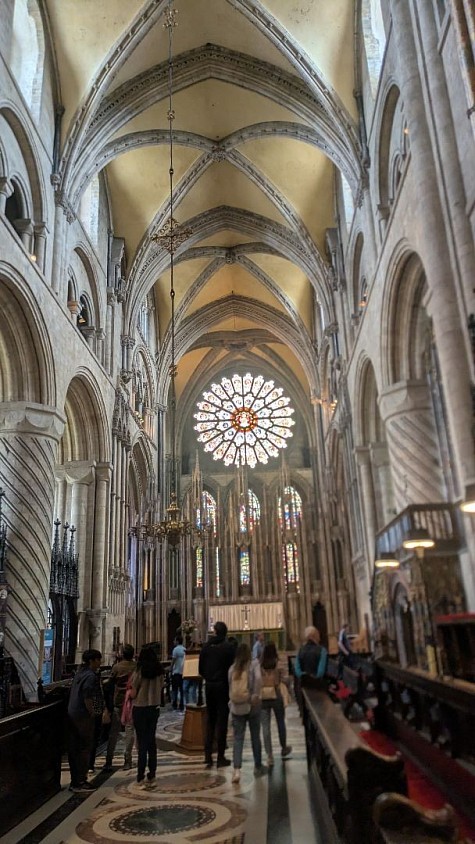
The Rose Window at Durham Cathedral
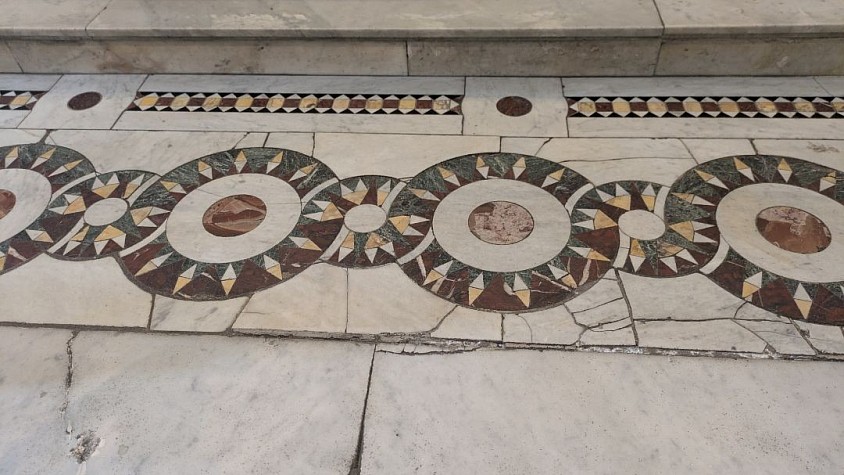
Victorian Cosmati-style marble pavement on the steps to the High Alter at Durham Cathedral
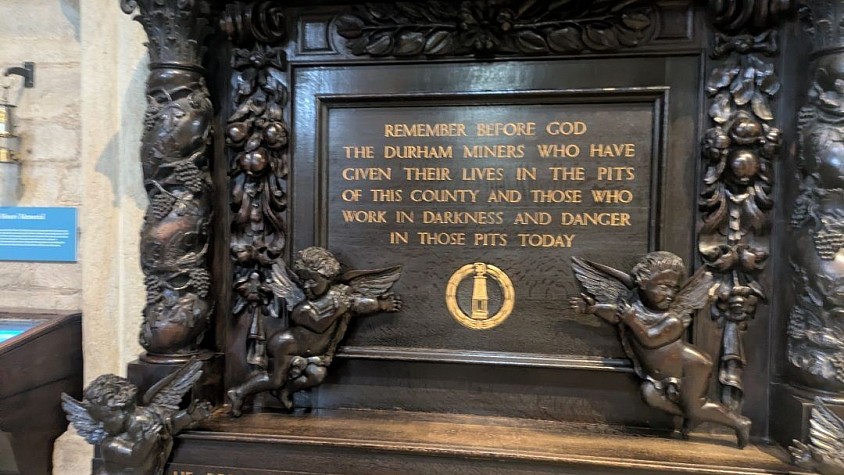
Important reference to the legacy and heritage of the local community at Durham Cathedral
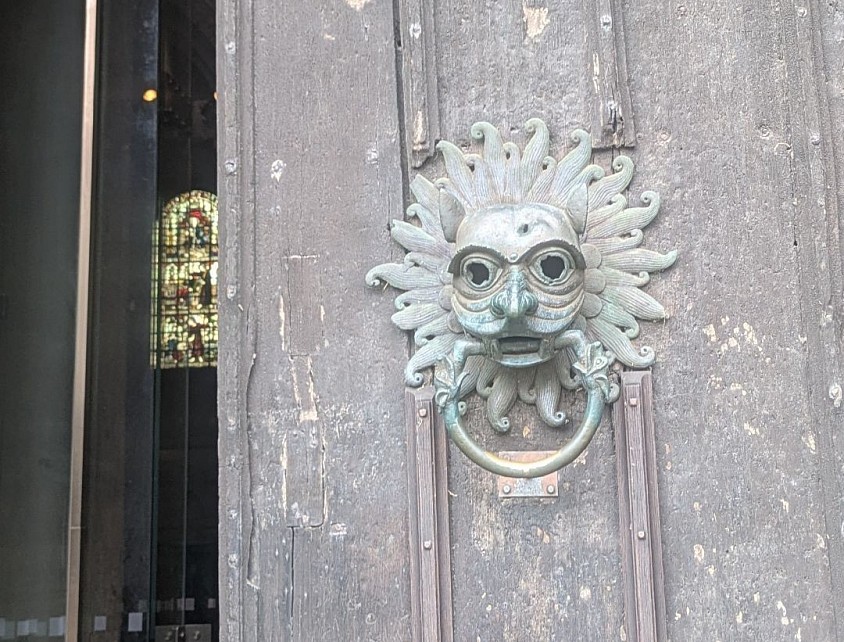
Splendid door knocker to claim Sanctuary at Durham Cathederal
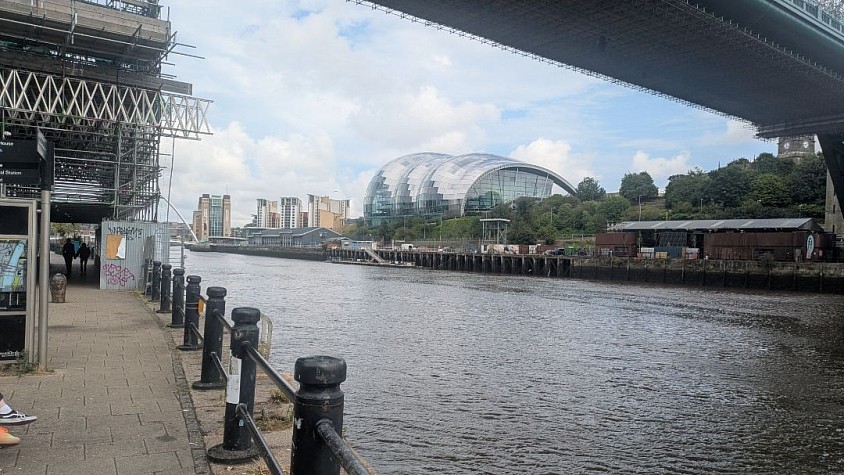
The Glasshouse a centre for musical education on the Gateshead bank of The River Tyne
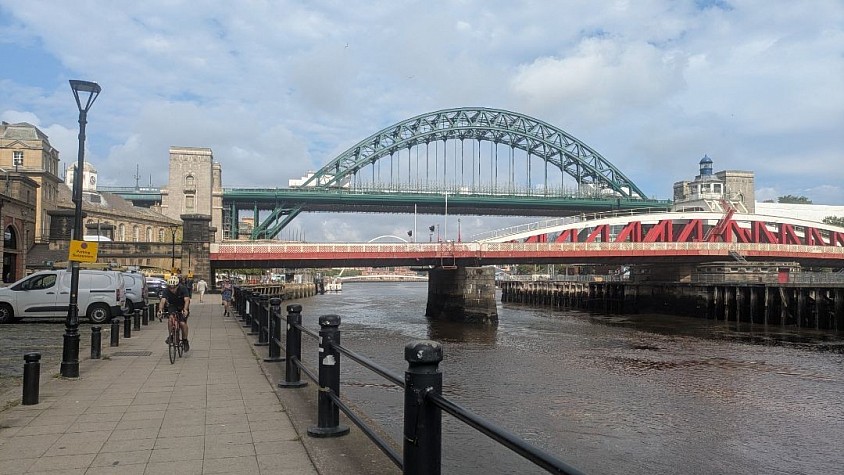
Iconic bridges over The Tyne from Newcastle to Gateshead
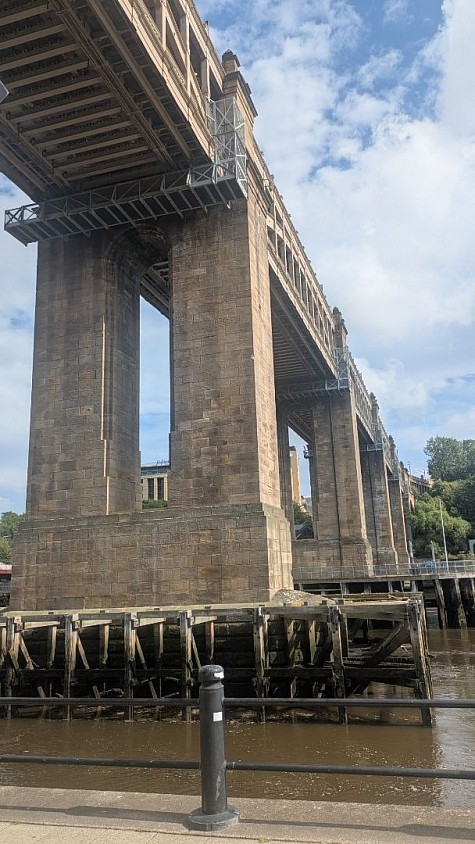
The High Level Bridge, the first in the World to carry both rail and road traffic
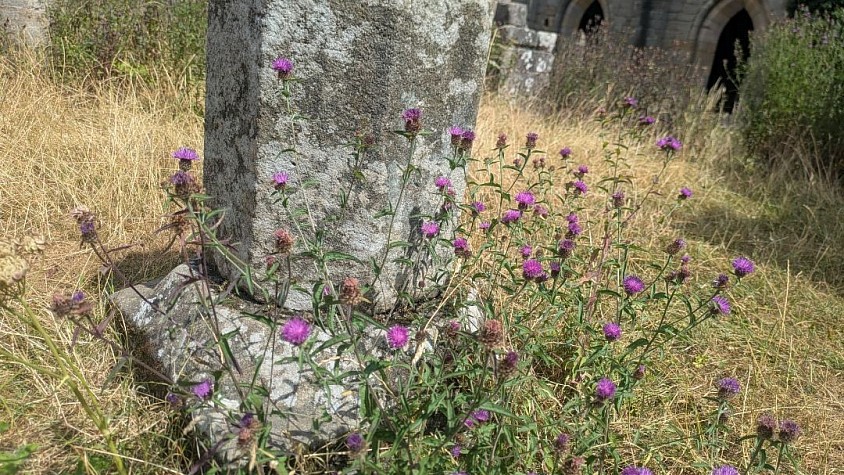
Knapweed and stone compliment one another at Fountains Abbey
Day 9: Scenic Dales, Sacred Ruins, and Estate Vistas at Fountains Abbey
A warm, bright summer day was in prospect as we set off from Bradford aboard the DalesBus 820/1—a brilliant Sunday service operated by The Keighley Bus Company that runs through to October 18th on Sundays and Bank Holidays (and takes bus passes, making it an absolute bargain!).
For two delightful hours, the bus meandered through some of Yorkshire's most breathtaking landscapes. Rolling dales, dense woodlands, sparkling reservoirs, and quiet, picturesque stone villages drifted past the windows. It was a thoroughly relaxing and joyous way to travel, allowing us to soak in the countryside without the hassle of driving.
A Quiet Welcome & Wooded Shade
By the time we arrived near Ripon, the midday heat was building. Fortunately, the visitor centre cafe provided a lovely outdoor seating area nestled beneath a cool canopy of trees—the perfect spot to pause for a well-earned cuppa and a slice of cake before stepping out into the estate.
The Grandeur and Tragedy of Fountains Abbey
Stepping into the grounds, the sheer scale of Fountains Abbey takes your breath away. Founded in 1132 by thirteen Benedictine monks seeking a simpler, more devout life, it grew over centuries to become one of the wealthiest and largest Cistercian monasteries in England.
Its tragic downfall came in 1539 during the Dissolution of the Monasteries, when King Henry VIII broke away from the Catholic Church. The Abbey was closed, its rich assets seized, and its majestic lead roofs stripped away. Left to the elements, the magnificent stone arches and soaring tower gradually transformed into the romantic, majestic ruin we see today.
Walking the Estate: A Sensory Journey
Walking around the estate today is an experience that touches all the senses. The grand monastic ruins are seamlessly integrated into the surrounding landscape of Studley Royal. As you amble along the winding pathways, you are framed by sweeping vistas, towering forests, gentle rivers, and tranquil lakes.
There is a profound sense of peace embedded in the very earth here. Standing beneath the soaring stone arches of the roofless nave, feeling the gentle summer breeze rustle through the surrounding woods, you can almost hear the soft echoes of ancient Gregorian chants carrying across the water. It is a place that invites you to slow down, breathe deeply, and feel a quiet connection to centuries of history.
#KeighleyBus #KeighleyBuses #TheKeighleyBusCompany
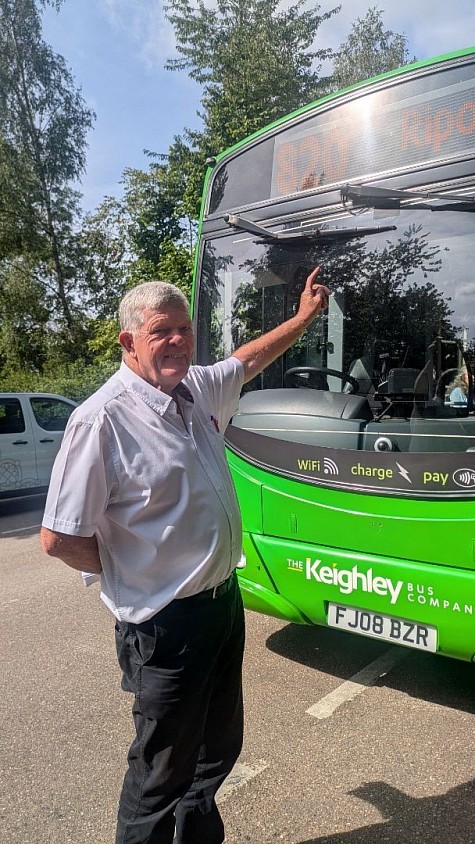
Keighley busses driver Roy drove us from Bradford Interchange to Fountains Abbey
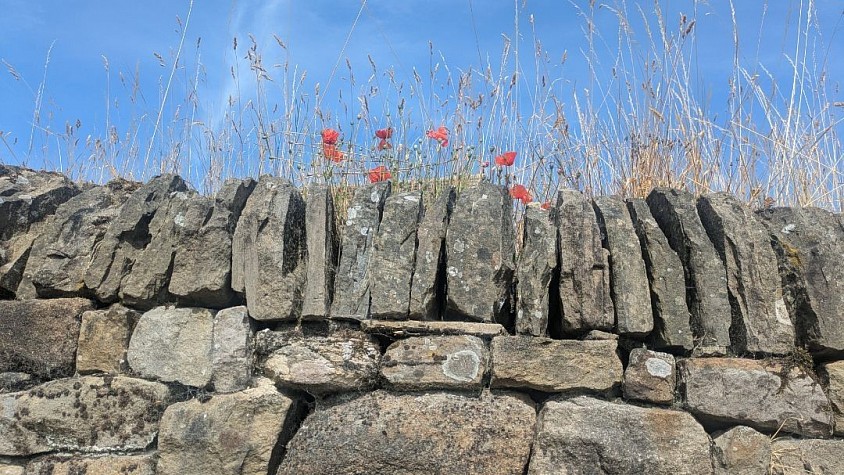
Dry stone walling with Poppies above at Fountains Abbey
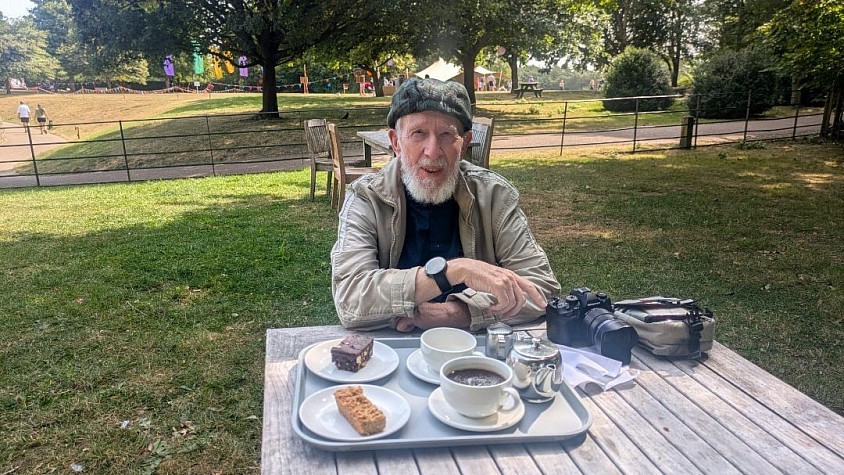
Stuart preparing for the cuppa and cake
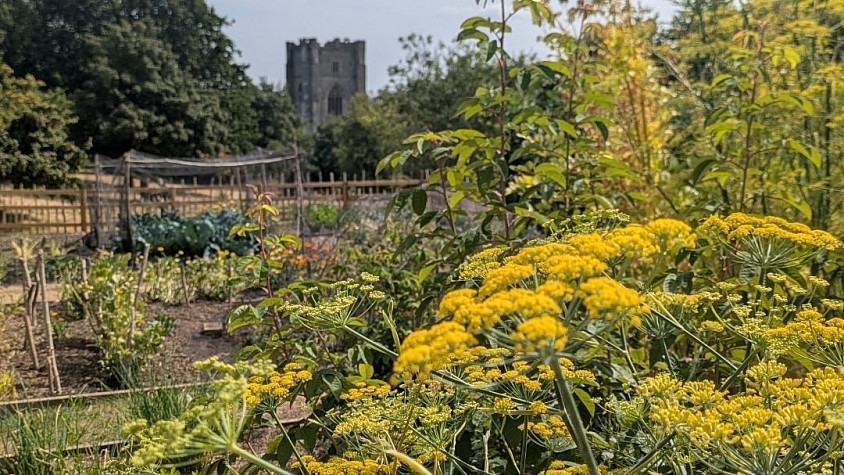
The Hubby Tower at Fountains Abbey through a blaze of Fennel
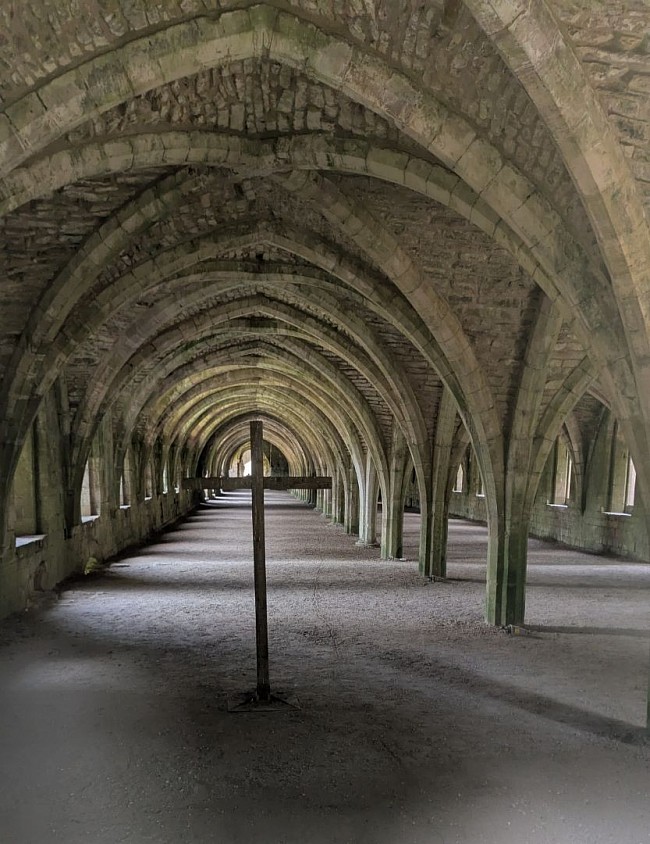
The Western Range at Fountains Abbey
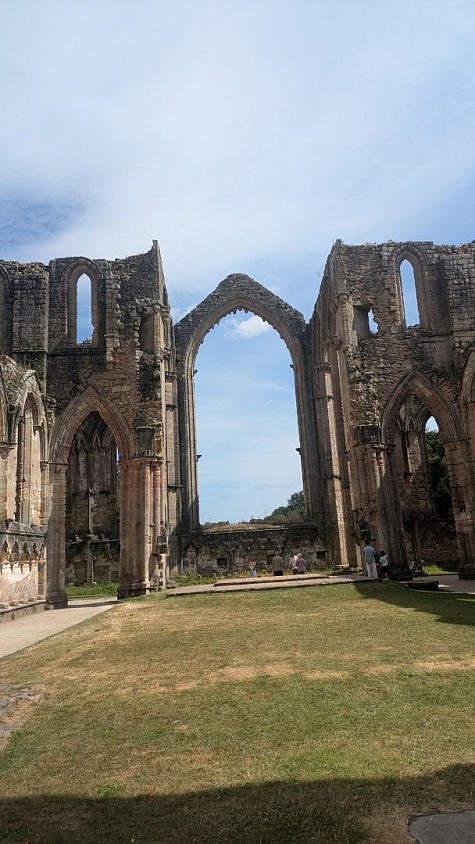
Splendid archway at Fountains Abbey
Bug Hotel at Malton station
Day 8: Whaling Stories, Vampires, and Community Spirit Beyond the Moors
Warm sunshine greeted us today as we collected our tickets in Pickering for the famous North Yorkshire Moors Railway. There was a slight initial sting of disappointment when we learned that high trackside fire risks meant steam locomotives were restricted, meaning our own train would be diesel-hauled. However, any slight hesitation vanished the moment we set off!
We were pulled along in grand style by Diesel-Electric locomotive 37688 Great Rocks, sweeping through lush forests, deep dales, and over winding rivers. The journey across the Moors delivered a smooth, nostalgic ride all the way to the dramatic coastal town of Whitby.
Whales, Explorers, and Bram Stoker’s Dracula
Whitby’s history is intimately bound to the sea. Historically a major whaling port, its harbour still echoes with tales of brave mariners setting out into the treacherous Northern oceans. Resting gracefully in the harbour is a magnificent replica of HM Bark Endeavour, honoring Whitby’s most famous maritime son, Captain James Cook, who learned his seamanship right here on these local waters.
Yet Whitby’s maritime arrivals aren't all historical—some belong to legend. In Bram Stoker’s classic novel Dracula, the terrifying Count arrives by sea during a roaring storm, his ghost ship running aground on the shore before he bounds up the famous 199 steps in the shape of a massive hound. Perched high above the town, the stark ruins of Whitby Abbey maintain a powerful, brooding presence over the coastline, casting a dramatic silhouette even on a bright and sunny summer afternoon.
Vibrant Tourism and Local Pride
The glorious weather brought out vibrant crowds of visitors, creating a wonderful atmosphere. There is something deeply uplifting about being in a bustling seaside town—sharing in the collective lift to the spirit while seeing the local economy thrive. From independent shops and fish-and-chip bars to harbour boat trips and open-top buses, the town was alive with energy and welcoming hospitality.
Community Harmony on the Rail Home
Our return journey through the Moors back to Pickering was pure joy, proving once again what an absolute treasure this heritage line is for the region.
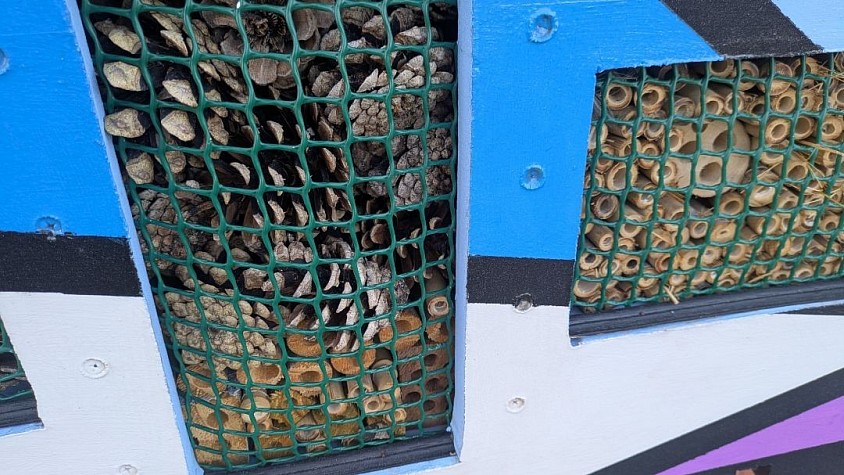
A particular highlight on our way back was stopping at Malton station, which serves as a heartwarming example of local pride and community stewardship. The station platforms are thoughtfully cared for by local volunteers, featuring "pick-your-own" herb planters, handmade bug hotels, and bird boxes.
Seeing local residents actively nurturing their station creates a delightful sense of harmony and continuity. It proves that when communities take genuine pride in looking after their own patch, it transforms a simple transit stop into a warm, memorable welcome for every visitor passing through. A truly fitting end to a brilliant day on the Moors!
